Views: 0 Author: Site Editor Publish Time: 2024-08-12 Origin: Site


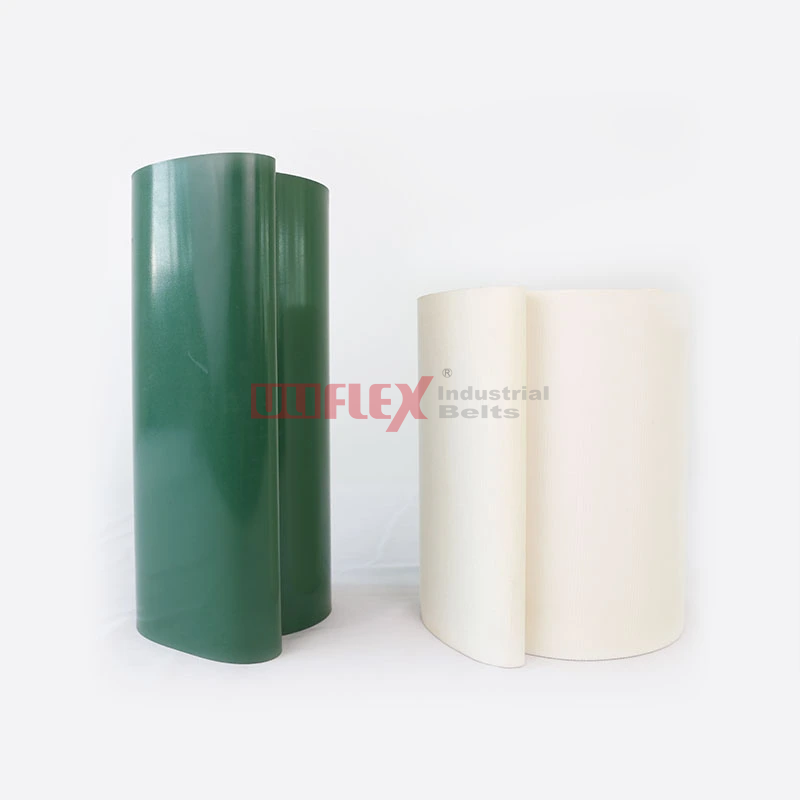
In today's rapidly developing industrial field, automation and efficiency are key. pvc conveyor belts have become an indispensable part of modern industry due to their excellent performance and wide range of applications. In this article, we will discuss the definition, type, application, working principle, maintenance, environmental characteristics and market prospects of PVC conveyor belt, aiming to provide readers with a comprehensive understanding.
PVC, known as polyvinyl chloride, is a plastic material known for its durability, cost-effectiveness, and chemical stability.PVC conveyor belts are conveyor belts made of PVC material, which are widely used in a variety of industrial settings to achieve efficient transportation of materials.
PVC conveyor belts can be classified into various types, such as light duty, heavy duty and food grade, according to their load carrying capacity, usage environment and special needs. Each type of PVC conveyor belt has its own unique design and features to meet the needs of different industries. For example, the PVC conveyor belts offered by Uliflex include a wide range of specifications and properties to suit various application scenarios.
PVC conveyor belts are widely used in a number of industrial fields such as food processing, mining and logistics. They not only improve productivity, but also ensure stable transportation and handling of materials. Through case studies, we can see the efficiency and reliability of PVC conveyor belts in practical applications.
The working principle of PVC conveyor beltis based on its continuous circulation of the belt body, through the drive system and conveying mechanism, to realize the smooth transportation of materials.Uliflex website provides detailed technical parameters and performance indicators to help users understand the working performance of PVC conveyor belt.
In order to ensure the long-term stable operation of PVC conveyor belts, regular maintenance and repair is indispensable, Uliflex website provides professional maintenance guide to help users to extend the service life of conveyor belts and keep its best performance.
Although PVC material has faced environmental challenges, with the improvement of production technology and the promotion of recycling, the environmental characteristics of PVC conveyor belts have been significantly improved, Uliflex and other manufacturers have taken positive environmental measures to produce more environmentally friendly PVC conveyor belts.
With the continuous advancement of industrial automation, the market demand for PVC conveyor belts continues to grow. In the future, PVC conveyor belts will continue to play an important role in improving productivity and reducing operating costs.
PVC conveyor belts play an increasingly important role in modern industry due to their high efficiency, durability and environmental friendliness. Through this paper, we can see the wide range of applications and great potential of PVC conveyor belts. We encourage readers to learn more about PVC conveyor belts and apply them in practical production to improve efficiency and economic benefits.