Views: 0 Author: Site Editor Publish Time: 2026-09-09 Origin: Site


In today’s fast-paced industrial world, the efficiency and precision of packaging processes are paramount. Whether it’s for food products, pharmaceuticals, or consumer goods, having the right tools in place to handle the packaging line is essential. Packaging machine belts are one of the core components in ensuring smooth, efficient, and accurate operations. These belts are responsible for transmitting motion, synchronizing different parts of the packaging machinery, and ensuring that products move through the line seamlessly.
There are several types of packaging machine belts, each designed to serve specific needs within the packaging process. Understanding the different types and how they work can significantly impact the efficiency, longevity, and cost-effectiveness of the packaging process. In this article, we will explore the various types of packaging machine belts, their properties, and how each type contributes to better productivity and smoother operations in industrial packaging lines.
Packaging machine belts come in various designs and materials to cater to different needs and requirements. Each belt type is engineered for specific applications that demand high precision, durability, and speed. The most common types of packaging machine belts include timing belts, flat belts, modular plastic belts, and conveyor belts.
Timing belts are engineered to provide precise, synchronized movement between different parts of packaging machinery. They are commonly used in systems where the exact positioning of products is required. Timing belts feature teeth that fit into corresponding grooves on pulleys, ensuring accurate synchronization with the machine's components. These belts are ideal for indexing, filling, labeling, and other packaging processes that require high precision.
Flat belts are simpler belts that run flat over pulleys to provide continuous motion. These belts are commonly used in general conveying systems where precise synchronization is not as critical. Flat belts are often used in low-speed packaging lines where continuous motion is essential, but the need for high precision is not as important.
Modular plastic belts are made up of interlocking plastic modules that offer flexibility and durability. These belts are highly resistant to wear and can be used in various industries where high-speed operations are essential. Modular plastic belts are typically used in environments where chemicals, oils, or high temperatures may come into contact with the belt, making them more resilient than traditional rubber or fabric belts.
Each type of belt is designed to fulfill specific tasks within a packaging line, and choosing the right type can significantly affect the efficiency and performance of the entire system.
When it comes to packaging machinery that requires precise motion control, timing belts are the go-to solution. These belts are specially designed to provide synchronous drive by ensuring that the motion is transferred accurately and precisely. The key feature of timing belts is their toothed structure, which allows them to fit into corresponding grooves on the pulleys, ensuring that the motion is synchronized across the system.
The teeth on timing belts come in various profiles, such as T-profile, AT-profile, and XL-profile, each designed to meet the specific needs of different applications. The most common profile is the T-profile, which is suitable for standard applications, but for higher-load applications, the AT-profile or XL-profile may be used.
The synchronous drive provided by timing belts is essential in applications that require high accuracy, such as filling, sealing, and labeling. For instance, in packaging lines where products need to be positioned precisely for filling, timing belts ensure that every item is placed in the correct position before the next stage in the process begins.
Timing belts also provide higher torque and are more efficient in transferring power, making them the ideal choice for high-precision tasks such as those found in Form-Fill-Seal (FFS) and Vertical Form-Fill-Seal (VFFS) machines.
The material composition of packaging machine belts directly impacts their strength, durability, flexibility, and overall performance. Different materials are chosen based on the specific demands of the packaging process. The most common materials used for packaging machine belts include polyurethane, rubber, and fabric.
Polyurethane timing belts are known for their high durability and excellent wear resistance. Polyurethane is a highly resilient material that can withstand harsh environments, including high temperatures, chemicals, and abrasion. Polyurethane belts are widely used in high-load applications, such as in food processing and automotive packaging lines, where both durability and flexibility are crucial. They also offer excellent performance over extended periods and can handle heavy-duty tasks without significant wear.
Rubber belts are often used in packaging machinery where flexibility and grip are needed. Rubber belts are more flexible than polyurethane belts and offer superior traction, which is essential in systems where products need to be securely held in place. They are often used in conveyor systems where moderate loads and flexibility are required.
Fabric belts are used in lightweight packaging applications where the load is not as heavy, but flexibility is key. These belts are commonly used in systems that involve small pulleys or where high levels of flexibility are necessary. Fabric belts are ideal for use in environments where the packaging process requires moving small items or handling light loads.
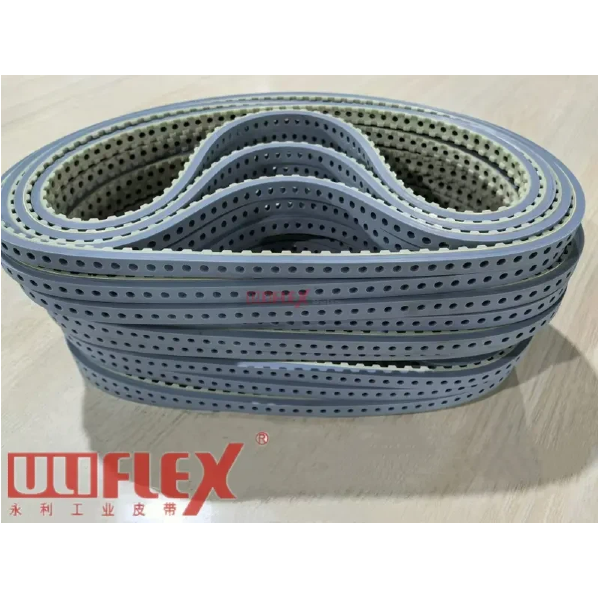
Table: Belt Material Comparison
Material |
Strength |
Application |
PU + cords |
High |
Heavy machines |
Rubber |
Good grip |
Versatile, flexible use |
Fabric |
Flexible |
Small pulleys, light loads |
This table provides a comparison of the different materials used in packaging machine belts, highlighting their respective strengths and applications. As shown, polyurethane + cords belts are ideal for heavy-duty applications, while rubber and fabric belts are suitable for more versatile or flexible tasks.
Another important consideration when selecting packaging machine belts is their structure. Endless belts and spliced belts each have their advantages and are suited to different types of applications.
Endless belts are continuous loops that have no seams or joins. This makes them incredibly strong and reliable, especially in applications that require maximum strength and durability. The seamless design allows the belt to handle high stresses without the risk of failure at the join, which is a common issue with spliced belts.
Endless belts are particularly useful in high-speed and heavy-duty applications where performance and reliability are crucial. These belts are widely used in packaging lines that require continuous motion and maximum power transmission, such as those in the food and beverage industry.
In contrast, spliced belts are made by joining the ends of a belt together to form a loop. These belts offer flexibility in terms of length and are often used in packaging systems where customization is required. While spliced belts may not offer the same strength as endless belts, they are versatile and easy to adjust.
Spliced belts are ideal for applications where the belt length needs to be customized, and they are often used in packaging systems that require a balance of performance and adaptability.
Selecting the right type of packaging machine belt requires careful consideration of several factors, including speed, load capacity, and the environment in which the belt will be used.
For applications that require high-speed operation, such as fast-paced packaging lines, timing belts are often the best option. Timing belts provide precise, synchronized motion, ensuring that products are moved at the correct intervals without any slippage.
If the packaging line is handling heavy products or materials, endless belts or polyurethane timing belts are recommended. These belts are designed to withstand higher loads and deliver consistent performance, even under demanding conditions.
The environment in which the packaging machine belts operate is also a crucial factor. For example, if the packaging line operates in a high-temperature environment or where chemicals are present, polyurethane belts are ideal due to their resistance to heat and chemicals.
By considering these factors, businesses can select the appropriate packaging machine belts to optimize their packaging process, improve productivity, and reduce downtime.
Choosing the right packaging machine belts is crucial for optimizing efficiency, reducing errors, and enhancing overall production speed in packaging lines. Whether you need timing belts for precise motion, rubber belts for flexibility, or polyurethane belts for durability, understanding the different types and their properties allows you to make an informed decision. The right belt ensures smooth operation, improved accuracy, and higher throughput, ultimately contributing to cost savings and enhanced performance.
At Uliflex, we specialize in providing high-quality packaging machine belts designed to meet the demanding needs of modern packaging lines. Our belts are engineered for precision, durability, and reliability, ensuring that your packaging operations run smoothly and efficiently. For more information or to discuss your specific packaging needs, please contact us today.
What are the advantages of timing belts in packaging applications?
Timing belts provide synchronized motion, ensuring that products are accurately positioned and moved through the packaging process with high precision.
How do spliced belts differ from endless belts?
Spliced belts are customizable and flexible, while endless belts offer maximum strength and durability, making them ideal for heavy-duty applications.
What factors should be considered when choosing packaging machine belts?
Consider the speed, load capacity, and environmental conditions when selecting the right belt for your packaging line.
Can packaging machine belts be used in all types of packaging systems?
Yes, packaging machine belts are versatile and can be used in various packaging systems, including filling, labeling, sealing, and case erecting processes.