Views: 0 Author: Site Editor Publish Time: 2026-08-21 Origin: Site


Standard maintenance routines often hide significant operational drains. Equipment teardowns for captive shafts devour valuable production hours. Excessive machine vibration ruins precision finishes on machined parts. Bloated replacement belt inventories consume vast amounts of warehouse shelving space. These hidden inefficiencies systematically cripple daily output goals.
The PowerTwist link V belt emerges as a premium alternative to traditional endless rubber belts. It utilizes a highly engineered segmented construction instead of a continuous loop. This modular design radically transforms how maintenance teams approach power drive management. Technicians can solve complex mechanical challenges using a single, adaptable component.
We built this guide to support maintenance managers, machinists, and facility engineers. It evaluates the distinct operational benefits of these segmented polyurethane belts. You will learn how to identify specific drives where this upgrade maximizes efficiency. We will help you determine if this technology justifies implementation across your critical machinery infrastructure.
Definition: A PowerTwist link V belt is an adjustable, segmented polyurethane V belt designed for rapid installation and vibration reduction.
Primary ROI: Eliminates the need to dismantle machinery for belt replacements on captive or restricted drives.
Inventory Efficiency: Allows facilities to stock a single roll to create any belt length on demand, replacing large inventories of fixed-length standard belts.
Performance: Delivers superior resistance to extreme temperatures, oils, and chemicals compared to standard rubber belts.
Advanced material science separates segmented options from conventional endless belts. Standard belts rely on basic vulcanized rubber. This traditional rubber stretches permanently over time. It also degrades quickly when exposed to harsh industrial chemicals. We must look closely at the modern materials replacing these legacy compounds.
Custom polyurethane elastomers form the core of this technology. Manufacturers reinforce these advanced elastomers using multiple plies of polyester fabric. This creates an exceptionally durable polyurethane V belt. The resulting material resists stretching under heavy loads. It shrugs off physical abrasions effortlessly. The polyester reinforcement adds massive tensile strength to the overall structure. Traditional rubber compounds simply crack and glaze under similar environmental stress.
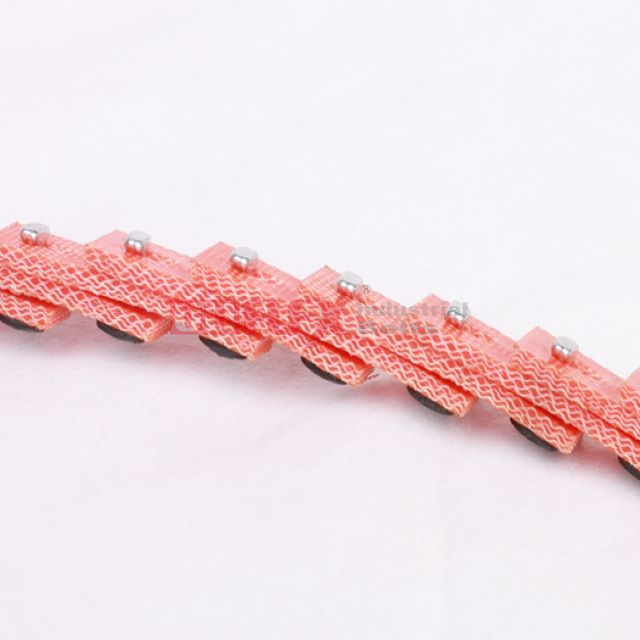
The interlocking "twist and lock" link mechanism defines its segmented construction. Individual links act as independent flexible components. They connect securely together to form a continuous loop. You do not need metal fasteners to join them. You avoid splicing tools completely. You simply twist the tab of one link. Then, insert it through the designated slot of the adjacent link. You twist it back to lock it securely. This creates a robust, reliable power drive connection.
These segmented belts meet standard classical pulley cross-section requirements. You do not need specialized hardware modifications. They retrofit seamlessly onto existing equipment sheaves. The links compress slightly as they enter the pulley groove. This wedging action mimics a solid belt perfectly. It ensures maximum surface contact and excellent power transfer.
We provide a reference chart below detailing standard profile compatibility.
Belt Profile | Top Width | Typical Industrial Applications |
|---|---|---|
Z / 3L | 3/8 inch | Light duty machinery, drill presses, small fans |
A / 4L | 1/2 inch | Table saws, HVAC blowers, air compressors |
B / 5L | 5/8 inch | Heavy duty agricultural equipment, large lathes |
C Profile | 7/8 inch | Industrial cooling towers, heavy manufacturing drives |
Facilities constantly battle mechanical downtime and inconsistent output quality. Traditional power drives require extensive labor hours to maintain. We must evaluate how upgrading belt technology directly solves these core operational problems.
Captive drives create major maintenance headaches. A captive shaft features enclosed outboard bearings on both sides of the pulley. Replacing a solid rubber belt requires dismantling the entire machine structure. Technicians must remove safety guards, loosen bearing blocks, and realign shafts. This intensive process often takes several hours.
An adjustable V belt solves this dilemma immediately. You simply wrap the segmented belt around the installed pulleys. You link the ends together in just a few minutes. The machine stays completely intact. Total replacement time drops from hours to fractions of an hour. This rapid turnaround represents massive labor efficiency.
Solid rubber belts carry continuous tension waves across their length. They transmit harsh motor vibrations directly to the driven shaft. These resonant frequencies cause chatter marks on machined metal parts. Segmented designs aggressively disrupt these vibration waves. The interlocking links act as individual shock absorbers. They break the continuous path of resonance. Precision machinery benefits immensely from this deadened vibration. Lathes and CNC machines produce significantly cleaner cuts. Woodworking equipment runs noticeably smoother and quieter.
Maintenance warehouses typically stock hundreds of specific endless belt sizes. Managing this massive inventory creates logistical chaos. Belts degrade on the shelf before technicians ever use them. Finding the correct length delays critical repairs. Segmented link technology eliminates this bloated inventory entirely. One box of standard-profile link belt replaces dozens of different fixed-length belts. Technicians simply cut the exact length required on demand. This approach dramatically shrinks warehouse storage requirements.
Harsh operating environments destroy conventional rubber quickly. Steam hardens vulcanized rubber drives. Oil causes them to swell and slip. Industrial grease degrades their structural integrity. Polyurethane actively resists these destructive elements. It maintains optimal flexibility despite heavy exposure to water and steam. It repels common industrial solvents effectively. This superior chemical resistance extends operational lifespans significantly. You replace belts far less frequently when operating in challenging facility conditions.
Different industries face unique mechanical challenges. A segmented power transmission belt provides versatile solutions across various sectors. We have identified several key deployment scenarios where this technology excels.
Large manufacturing facilities rely heavily on continuous air handling units. Cooling towers require constant airflow to regulate facility temperatures. Heavy-duty exhaust blowers clear hazardous fumes from production floors. When these massive HVAC drives fail, entire production lines shut down. The resulting production loss proves devastating. Segmented belts allow rapid emergency repairs on these critical air handlers. Technicians restore airflow in minutes without tearing down large blower assemblies.
Metalworking shops demand absolute accuracy from their equipment. Lathes, drill presses, and milling machines require smooth power delivery. Standard endless belts often transfer microscopic motor pulses to the cutting tool. This vibration ruins the final surface finish. Upgrading to segmented links isolates the spindle from motor vibration. Machinists achieve superior tolerances on critical aerospace and automotive components. The reduced chatter directly translates to higher product acceptance rates.
Cabinetry shops and furniture makers utilize heavy table saws and band saws daily. Blade flutter represents a major problem in woodworking. Excess vibration causes the saw blade to wobble slightly during cuts. This wobble leaves prominent saw marks on expensive hardwoods. Segmented link belts represent a common, highly effective upgrade path here. They dampen the motor vibration before it reaches the saw arbor. The blade spins perfectly true. Woodworkers spend less time sanding out undesirable machine marks.
Certain specific applications require specialized power drive characteristics.
Knifemaking Grinders: Artisans require perfectly smooth belt sander operation to grind delicate knife bevels. Reduced vibration prevents uneven grind lines.
Agricultural Equipment: Combines and tractors operate far away from maintenance facilities. Farmers use segmented rolls to perform emergency field replacements instantly.
Marine Engine Drives: Boat engine compartments offer severely restricted access. Changing a captive water pump belt at sea proves incredibly difficult. Link belts allow quick marine repairs without disassembling cooling systems.
Proper installation ensures maximum longevity and performance. Understanding the physical realities of segmented belts prevents common maintenance errors. We outline the correct methodologies below.
The manual twist-lock assembly process requires no special equipment. You execute the installation using your bare hands. First, wrap the unlinked roll around your existing pulleys. Pull it tight to determine the exact necessary length. Second, twist the designated link 90 degrees to detach the excess material. Third, route the custom-sized belt around the drive. Finally, snap the two ending links together using the twist-and-lock motion. The belt is now ready for immediate operation.
You must pay strict attention to installation direction. Every link V belt features a highly specific directional orientation. We offer an experience-based warning regarding this aspect. The outer tabs of the links must always trail the direction of rotation. If you install them backward, the leading edges will catch against the pulley grooves. This error causes aggressive friction. The links will degrade rapidly and eventually tear apart under load. Always verify motor rotation direction before snapping the final links together.
We must transparently address the break-in realities of polyurethane elastomers. These highly durable materials do experience initial mechanical stretch. The interlocking nodes also seat themselves deeper into the pulley grooves during early use. This settling process happens primarily during the first 24 hours of operation under full load.
You must actively manage this stretch. We strongly recommend scheduling a re-tensioning session after the first day of heavy use. You simply roll the belt off the sheave. You detach exactly one link to shorten the loop. You then roll the belt back onto the drive. This quick adjustment restores optimal tension. The belt will subsequently operate for years without requiring further modifications.
Maintenance professionals must constantly balance operational efficiency against application demands. Segmented belts offer massive advantages, but they do not replace conventional drives universally. We created a framework to help you decide when to upgrade.
Certain machines operate perfectly fine using legacy materials. High-speed drives functioning over 5,000 RPM often require the continuous profile of a solid belt. Equipment with easily accessible shafts represents another clear case. If a technician can swap a solid belt in under five minutes, an upgrade offers minimal labor advantage. Simple drives located in clean, temperature-controlled environments rarely degrade rubber prematurely. In these specific, low-demand scenarios, a standard industrial V belt remains a highly practical choice.
You should prioritize segmented upgrades whenever drives cause repeated operational friction. Upgrade machinery requiring frequent, difficult belt replacements. Captive shafts demand this technology immediately. Upgrade drives located in environments that degrade rubber rapidly. Areas exposed to heavy oil drips, steam baths, or chemical sprays necessitate polyurethane durability.
Select this upgrade for applications where vibration directly degrades product quality. CNC machines and precision woodworking saws require deadened resonance. Finally, consider a complete facility transition if your warehouse struggles with massive SKU bloat. Consolidating hundreds of sizes down to three rolls vastly improves logistical efficiency.
You must evaluate the broader operational efficiency impact when making this decision. Contrast the premium construction of segmented polyurethane against the massive labor hours saved. Faster installation significantly reduces facility downtime. Every hour a machine runs instead of sitting idle improves total output. Reduced maintenance intervals free up technicians to address other critical facility issues. By eliminating equipment teardowns, you optimize your entire maintenance workflow.
We provide a quick decision matrix chart to streamline your evaluation process.
Application Characteristic | Standard Rubber Belt | Segmented Polyurethane Belt |
|---|---|---|
Access to Pulleys | Open, easy access | Captive shafts, blocked bearings |
Vibration Sensitivity | Low (general conveying) | High (precision machining, woodworking) |
Environmental Exposure | Clean, dry, ambient temperature | High heat, oil, steam, solvents |
Inventory Management | Can easily stock specific size | Need to reduce SKU count |
Operating Speeds | Ultra-high speeds (5000+ RPM) | Standard industrial speeds |
The PowerTwist segmented belt represents a highly strategic maintenance upgrade. It operates as a specialized engineering solution rather than a universal commodity replacement. It directly eliminates the massive downtime associated with captive drives. Its superior vibration dampening characteristics drastically improve output quality on precision machinery. Furthermore, polyurethane construction ensures excellent longevity in heavily contaminated industrial environments.
We advise you to audit your current power transmission infrastructure immediately. Walk your facility floor and identify your most problematic captive drives. Look for machinery plagued by resonant vibration issues. Select one or two high-downtime machines suitable for a pilot retrofit. Install a segmented roll and measure the operational improvements over thirty days. This practical test will clearly demonstrate the labor efficiency and performance advantages of moving away from solid rubber drives.
A: Yes, PowerTwist belts are engineered to match standard classical V-belt horsepower ratings. They utilize advanced polyurethane elastomers and multi-ply polyester fabrics. This heavy-duty construction delivers equivalent power transmission capabilities. You will not sacrifice torque or operating speed limits when replacing a conventional rubber belt of the equivalent profile.
A: No, they are direct drop-in replacements for standard A, B, C, and Z profile sheaves. The segmented links mimic the exact cross-sectional geometry of classical endless belts. You simply install them onto your existing hardware. They fit perfectly into the existing V-grooves without requiring any expensive pulley modifications.
A: Both represent premium segmented belt options. PowerTwist utilizes a twist-lock mechanism. Accu-Link uses a snap-lock design. Many technicians find the twist-lock style easier to manipulate manually without requiring tools. Both options offer excellent polyurethane durability. Material flexibility differs slightly, but both effectively reduce vibration and downtime across heavy industrial machinery.
A: In harsh conditions, they often outlast standard rubber belts. Polyurethane actively resists rapid degradation from oil, steam, and abrasive chemicals. Rubber hardens and cracks under these exact conditions. You must properly manage the initial mechanical stretch during the first 24 hours. Once correctly re-tensioned, they deliver an exceptionally long service life.